Free Delivery (by us) for Orders Over $550. Available in VIC metros only.
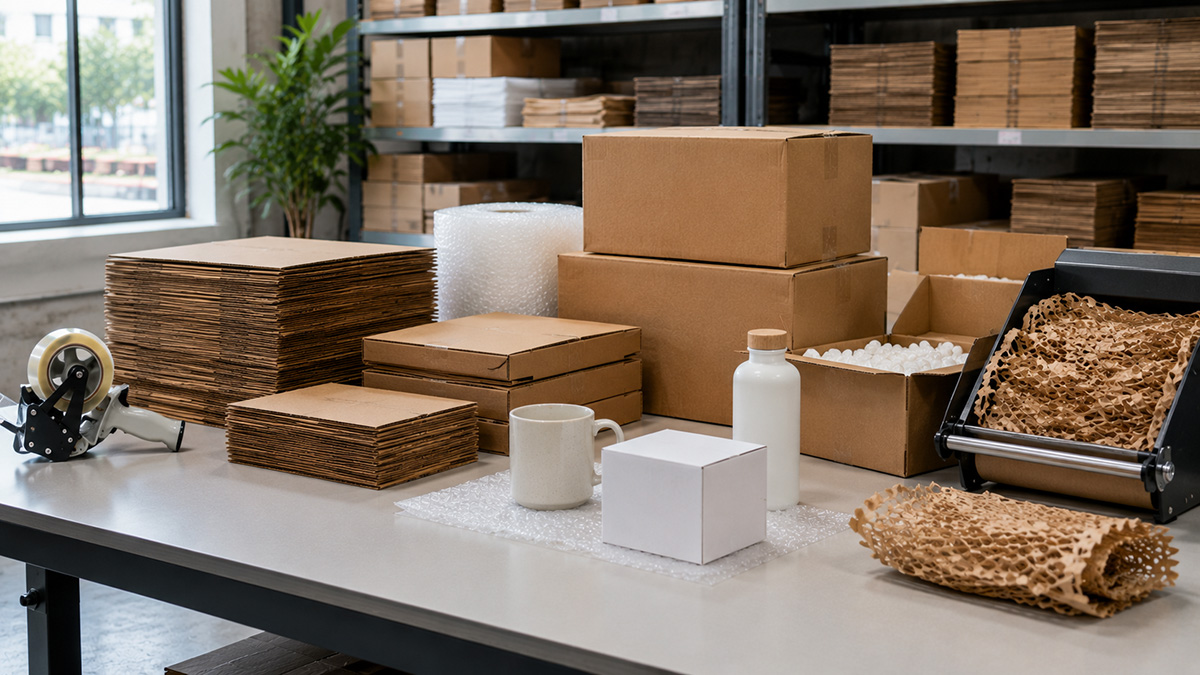
Mailing boxes and shipping boxes are often discussed as if they are completely separate products. In day-to-day business packaging, the difference is usually more practical: what is being sent, how far it will travel, how much protection it needs, and how quickly the packing team needs to prepare repeat orders.
A lightweight ecommerce order may only need a neat mailing box with a little internal protection. A heavier or more fragile order may need a stronger carton, better void control and reliable sealing. For Australian businesses buying packaging in bulk, Stanley Packaging supplies a broad range of boxes, tapes and protective materials, but the right choice still depends on the packing job, not just the product name.
The difference is usually about use, not a strict technical definition
In search results and supplier catalogues, “mailing box” usually points to packaging used for sending products directly to customers. These boxes are often chosen for ecommerce, retail dispatch, gift orders, spare parts, samples, accessories and other items that need a tidy outer presentation.
“Shipping box” is often used more broadly. It may refer to a regular slotted carton, a stronger cardboard carton, or a box selected mainly for transport strength rather than presentation. In other words, customers searching for shipping boxes are often trying to solve a freight, handling or protection problem.
That is why the better question is not “which name is correct?” but “which box suits the product, the handling risk and the packing process?”
Quick comparison
| Box type | Commonly suits | Watch for |
| Mailing boxes | Ecommerce orders, retail dispatch and lighter products where presentation matters. | Leave room for wrap or void fill without oversizing the parcel. |
| Cardboard shipping boxes | Larger items, warehouse dispatch and orders needing stronger outer packaging. | Check strength, item weight, tape quality and internal movement. |
| Heavy duty cardboard boxes | Heavier, more fragile goods or orders likely to be stacked during transport. | They add strength, but still need cushioning and void control. |
Start with product risk, not the box name
The most reliable way to choose between mailing boxes and shipping boxes is to work backwards from the product. A soft clothing order, a rigid boxed item, a glass jar, a ceramic piece and a spare part all behave differently in transit. The outer box is only one part of that risk profile.
Start by checking whether the product is fragile, heavy, sharp-edged, easily scratched, bend-sensitive, crush-sensitive or likely to move inside the carton. A light but delicate item may need more cushioning than a heavier product that is already boxed by the manufacturer. A flat item may need stiffness more than depth. A product with corners or handles may need space for edge protection.
This is where standard cardboard boxes and ecommerce-style mailing boxes can both have a place. The choice should match the item’s handling risk rather than the wording used on the box category.
Box fit matters more than most businesses realise
Good packaging fit is not the same as finding the smallest box that the product can squeeze into. The box needs enough internal space for protective material, but not so much empty space that the item can shift, bounce or be crushed into one side during handling.
Too much space usually means more filler, slower packing and larger parcel dimensions. Too little space can put pressure on the product, especially once tissue paper, bubble wrap, dividers or inserts are added. For ecommerce and fulfilment teams, this affects more than protection. It can influence packing speed, storage space, dispatch consistency and freight efficiency.
A practical rule is to choose a box that lets the packed product sit firmly once its required protection is added. If the item still moves after the lid is closed, the issue may be the box size, the amount of void fill, or both.
When mailing boxes make sense
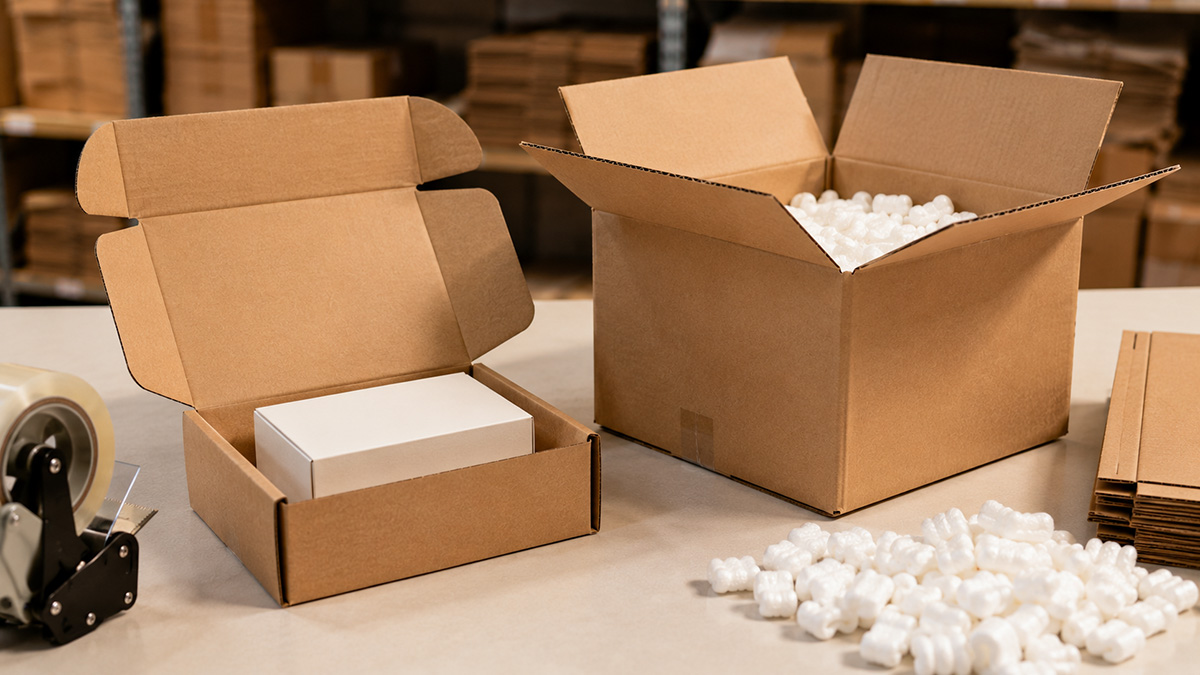
Mailing boxes are often a good fit when the item is relatively light, compact and benefits from a cleaner presentation. They can work well for ecommerce orders, retail products, gifts, accessories, cosmetics, stationery, samples and other goods where the customer experience starts when the parcel is opened.
They are also useful when a business wants a consistent packing routine. A small set of commonly used mailing box sizes can help warehouse teams pack faster, train staff more easily and keep replenishment simple. This matters for growing ecommerce operations as much as it does for larger fulfilment environments.
The limitation is that a mailing box should not be treated as a substitute for the right internal protection. If the product is fragile, has a delicate surface, or does not fill the box well, the packaging plan still needs a suitable wrap, insert or void fill.
When shipping boxes or stronger cartons are the safer choice
A stronger shipping carton is usually the safer direction when the product is heavier, bulkier, more fragile, or more likely to be handled several times before delivery. It may also be the better choice when products are being sent in larger order quantities, stacked in storage, or dispatched through a warehouse workflow where parcels are grouped and moved in batches.
For higher-risk orders, heavy duty cardboard boxes can provide a stronger outer packaging option. The important point is that strength and fit should work together. A stronger box with too much empty space can still allow damage if the product shifts inside.
If the product is fragile, the safer workflow is usually: wrap or separate the item first, place it in a suitably sized box, fill remaining movement space, then seal the carton properly. That sequence is more reliable than choosing a larger box and relying on loose fill to solve every issue.
Presentation and transit strength are not the same thing
Some boxes are chosen because they look neat and create a good unboxing experience. Others are chosen because they are easier to stack, seal, label and move through transport. Both priorities are valid, but they should not be confused.
For a retail-style ecommerce order, a mailing box can help the parcel feel more considered and organised. For a heavier shipment, a plain shipping carton may be the more sensible choice because the customer’s first priority is receiving the item undamaged. In many cases, presentation can still be handled inside the box with tissue paper, wrapping, product sleeves or inserts.
This is especially useful for businesses that ship a wide product range. Instead of forcing every product into the same packaging style, it is often better to separate orders into presentation-led, protection-led and efficiency-led packing flows.
Build a repeatable box range for fulfilment
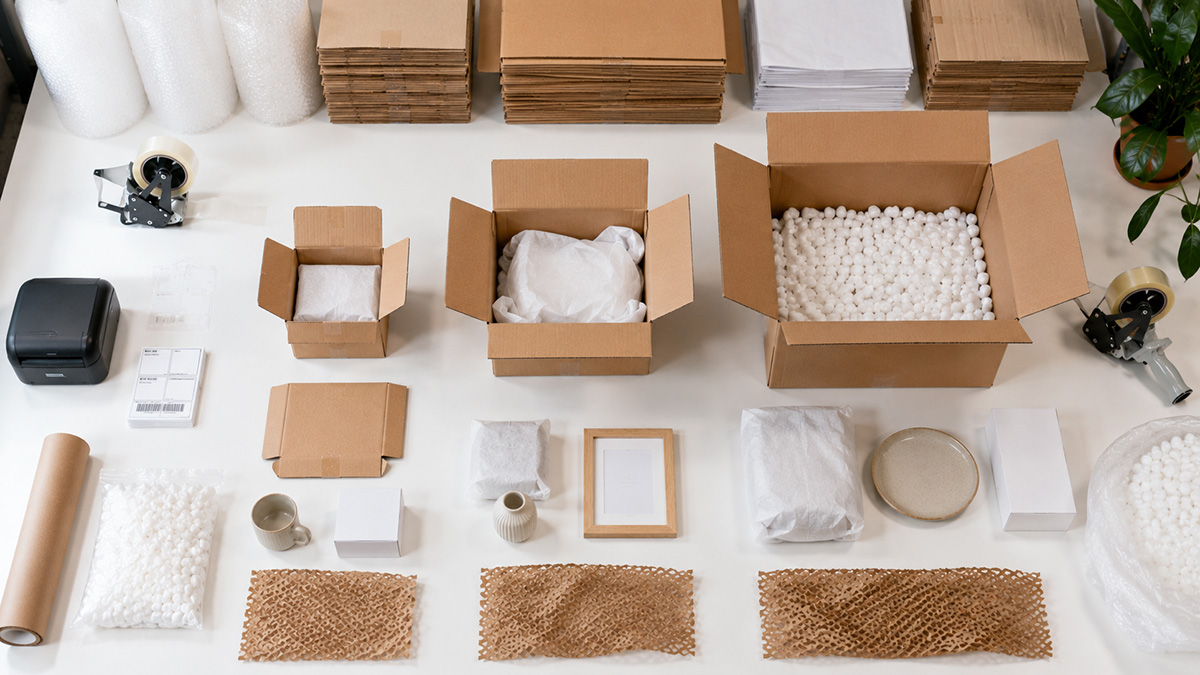
A common mistake is choosing a new box size every time a new product is added. That may feel precise, but it can make stock control, staff training and packing station setup harder. For regular ecommerce and warehouse dispatch, a more practical approach is to build a small range of repeatable box sizes that covers most order profiles.
This does not mean using only one or two boxes for everything. It means grouping products by packed size, protection level and order pattern. For example, one box size may suit small boxed accessories, another may suit wrapped homewares, and another may suit larger cartons or multi-item orders.
The right box range should reduce decision-making at the packing bench. When staff know which box to use for common products, packing becomes faster and more consistent, and the business is less likely to overuse filler or choose oversized cartons under pressure.
Remember the rest of the packing system
The box is important, but it cannot do every job alone. Tape, labels, void fill and protective wrap all affect how the parcel performs. A good box can still fail if it is under-sealed, overfilled, poorly supported inside, or packed with the product pressed hard against one wall.
For most business shipping, the final check should be simple: the product is protected, the box fit is sensible, the parcel does not rattle, and the closure is secure. Using suitable packing tapes is part of that system, especially for regular slotted cartons and heavier parcels.
A simple decision checklist
- If the product is light, compact and presentation matters, start with a mailing box.
- If the product is heavy, fragile, bulky or likely to be stacked, consider a stronger cardboard shipping box.
- If the product can move inside the box after protection is added, adjust the box size or void fill.
- If the packing team handles repeat orders, build a consistent box range instead of choosing from too many one-off sizes.
- If damage complaints happen, review the whole packing system before assuming the box alone is the problem.
FAQ
Are mailing boxes and shipping boxes the same thing?
They can overlap, but they are usually chosen for different reasons. Mailing boxes often suit ecommerce dispatch and presentation, while shipping boxes is a broader term that may include stronger cartons for heavier or higher-risk transport.
Are mailing boxes strong enough for shipping?
They can be, depending on the item, the box design, the parcel weight and the internal protection used. For heavier, fragile or awkward items, a stronger cardboard box may be more appropriate.
How much space should be left inside a shipping box?
Leave enough room for the protective material needed around the product, but avoid so much empty space that the item can move around. A well-packed parcel should feel secure once closed.
Should ecommerce businesses use fewer box sizes?
Most businesses benefit from a repeatable box range rather than too many one-off sizes. The right range depends on product dimensions, order patterns and the protection needed for common shipments.
Do I still need void fill if I use a strong box?
Often, yes. Box strength protects the outside structure, while void fill helps stop the product moving inside. The two solve different problems.