Free Delivery (by us) for Orders Over $550. Available in VIC metros only.

Choosing a mailing box size sounds simple until the product reaches the packing bench. A box that looks right on a product page can be too tight once protective packaging is added, or too large once the order is packed and ready to ship. For ecommerce businesses, the right size is not just about fitting the product. It is about fitting the product, the protection and the packing workflow together.
A useful rule is to measure the finished packed item, not only the product itself. That means allowing for surface protection, cushioning, void fill, product inserts or presentation layers where they are actually needed. Stanley Packaging supplies mailing boxes for Australian businesses, but the best size depends on what is being shipped, how fragile it is, how often it is packed and whether the order usually contains one item or several.
This guide explains how to choose mailing box sizes for ecommerce orders without overpacking, under-protecting the product or creating unnecessary work at the packing station.
Start with the packed product, not the bare product
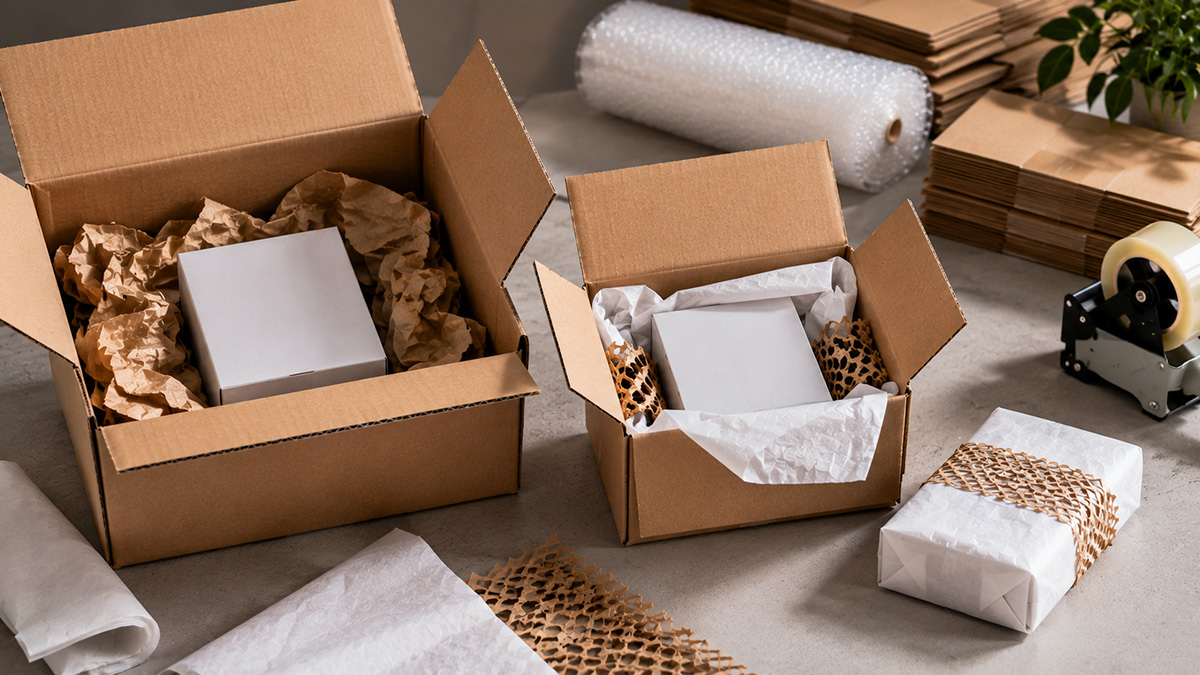
Many businesses start by measuring the product length, width and height. That is useful, but it is not enough. The box needs to fit the product in the condition it will actually be shipped. A candle, skincare jar, spare part, ceramic item or boxed retail product may need a protective layer before it goes into the carton.
For fragile or surface-sensitive items, that extra layer might include bubble wrap, tissue paper, corner protection or another protective material. Once those layers are added, the product footprint can change. If the business chooses a box based only on the original product size, the packer may have to force the item in, reduce the protection or move to a larger box at the last minute.
A better process is to create a test pack: wrap the product as it would be wrapped for a real order, then measure the finished packed size. This gives a more realistic starting point for selecting a mailing box.
The right size is not always the smallest size
A common mistake is to treat the smallest possible box as the best box. A compact parcel can be helpful, but only if the product still has enough protection and is not under pressure. If the box is too tight, cushioning can be compressed before the parcel even enters transit, which reduces its ability to absorb handling impacts.
The opposite problem is also common. A box that is much larger than the packed product may need too much void fill, slow down packing and allow the item to move if the empty space is not controlled. The goal is a box that is close enough to limit movement, but not so close that the product or protective layer is being squeezed.
Think of the box as a controlled space. The product should sit securely, the protective material should keep its shape, and there should be only enough spare room to finish the pack properly.
| Situation | Box sizing issue | Practical direction |
| Box is too small | Protective material is compressed or product is forced in | Move up a size or reduce unnecessary packing layers without exposing the product. |
| Box is too large | Product can move or needs too much void fill | Move down a size or use a more suitable box style for the product shape. |
| Product is fragile | Extra cushioning changes the packed dimensions | Measure after wrapping, not before. |
| Product is soft or flexible | A box may add cost and space where a satchel could work | Consider whether the order needs a box at all. |
| Product is flat | Risk is bending, not only impact | Choose a box or mailer that supports the full surface area. |
Allow for different product types
Different products need different space around them. A soft garment, a framed print, a cosmetics bottle and a heavy spare part should not be treated the same way. The right clearance depends on the product risk, not just the product dimensions.
Soft goods and clothing can often tolerate a closer fit because they flex and are less likely to break. Fragile products need room for cushioning. Boxed retail goods often need edge and corner protection so the outer retail box does not arrive crushed. Flat items need support across the surface so they do not bend.
Multi-item orders add another layer of complexity. If products can rub, knock into each other or crush softer items, the box size needs to allow for separation or a different packing sequence. The most common order combinations should be tested, not just the best-selling single product.
Build a repeatable range of box sizes
For ecommerce, the most efficient solution is rarely a different box for every product. That creates too much stock complexity and slows down the packing team. At the same time, using only one or two sizes can lead to overpacking and wasted space.
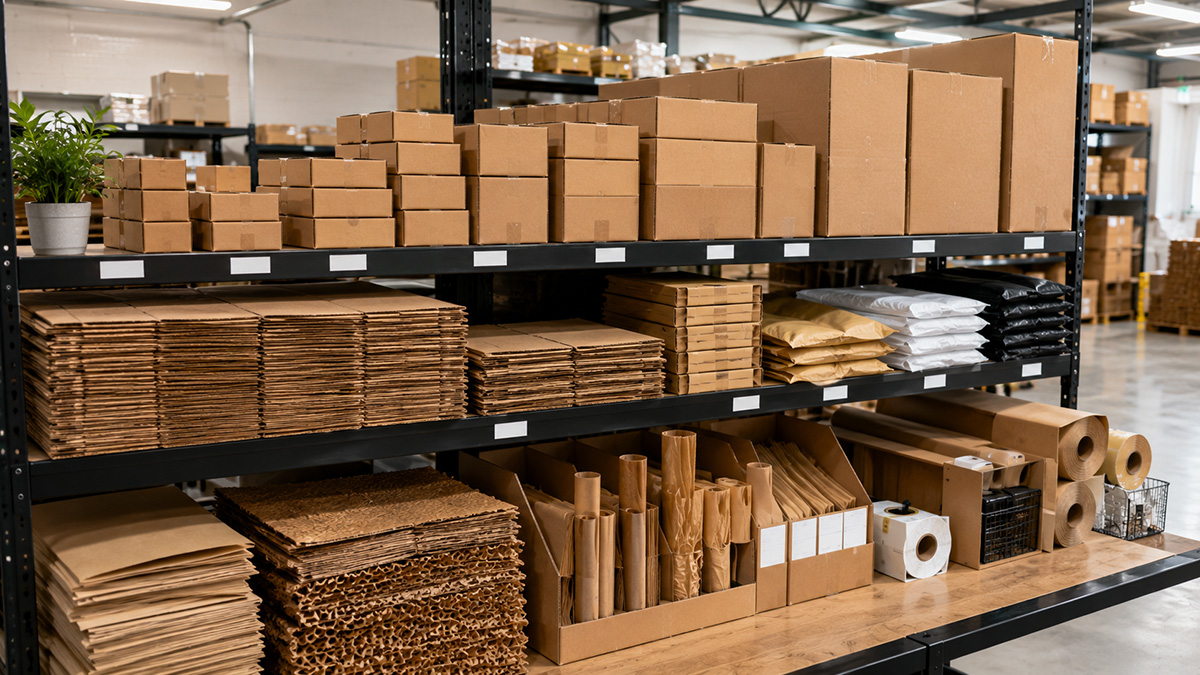
A stronger approach is to build a small range of repeatable box sizes. Each size should have a clear role: small single-item orders, flat or shallow items, medium products, bulkier products and higher-protection orders. This makes it easier for packers to choose quickly and helps procurement keep the right cartons in stock.
For businesses using presentation-style ecommerce packaging, die-cut boxes can suit many lighter retail orders. For high-volume dispatch where closing speed matters, self-sealing boxes may help reduce the number of packing steps. The best setup depends on the order profile, not just the individual SKU.
Do not ignore shipping cost and packing time
Outer parcel dimensions can affect shipping cost, especially where carriers calculate charges using size as well as weight. A box with too much empty space may cost more to ship and require more material to stabilise the product. Across hundreds or thousands of orders, that extra space can become a real operating cost.
However, reducing box size too aggressively can create other costs. If the product arrives damaged, if staff have to repack orders, or if packers need extra time to make the product fit, the cheaper-looking box may not be cheaper in practice.
For a business, box sizing should be judged by the whole packed order: material use, damage risk, packing time, storage space and shipping efficiency.
Use a simple test before committing to bulk cartons
Before buying a large volume of any new mailing box size, test it against real orders. The test does not need to be complicated. Pack a sample of common products and order combinations exactly as the warehouse would pack them on a normal day.
- Pack the product with the intended protective material.
- Place it into the proposed box and close the box without forcing it.
- Gently shake the closed parcel to check whether the item moves inside.
- Check whether the box bulges, collapses, wastes space or needs excessive fill.
- Ask whether the packing steps would still be efficient when repeated at volume.
If the box passes the product test but slows the team down, it may still need adjustment. Ecommerce packaging has to work in real packing conditions, not only on a sizing chart.
When a mailing satchel may be the better option
Not every ecommerce order needs a box. Soft, flexible and low-risk products may be more practical in mailing satchels, especially where the product does not need rigid structure or added presentation space. Clothing, textiles and some lightweight accessories are common examples.
A mailing box usually makes more sense when the product is fragile, crush-sensitive, boxed for retail presentation, irregular in shape or part of a multi-item order that needs better separation. The decision should be based on protection and workflow, not only on appearance.
A practical box sizing checklist
- Measure the product after any protective layer has been added.
- Choose a box that limits movement without compressing the item.
- Test common multi-item order combinations, not just one product.
- Keep a manageable range of repeatable box sizes for the packing team.
- Consider whether a satchel, rigid mailer or carton is better for the product type.
- Review packing time, material use and damage risk before committing to bulk stock.
FAQ
How much extra space should I leave inside a mailing box?
Leave enough room for the protective packaging the product genuinely needs, but avoid empty space that allows the product to move. The best test is to pack the product as it would ship, close the box and check whether the item stays secure without being compressed.
Should I measure the product before or after wrapping it?
Measure both if possible, but choose the box based on the finished packed size. Bubble wrap, tissue paper, product inserts and other protective layers can change the final dimensions enough to affect the box choice.
Is it better to use one box size for all ecommerce orders?
Usually no. One box size may simplify purchasing, but it can lead to overpacking, wasted fill and higher shipping volume. Most ecommerce businesses are better served by a small, repeatable range of box sizes that covers their common order types.
When should I use a mailing box instead of a satchel?
Use a mailing box when the product needs structure, cushioning space, edge protection or a more controlled presentation. Satchels can be suitable for soft, flexible and lower-risk products where a box would add unnecessary space and cost.
Can a box be too tight if the product still fits?
Yes. If the product only fits by compressing the protective layer or forcing the box closed, the pack may be too tight. The product should be secure, but the protection still needs enough space to do its job.
What should I do if my orders vary a lot in size?
Group common products and order combinations into size ranges. Choose a few box sizes that cover most orders well, then keep a separate option for unusually large, fragile or multi-item orders. This is usually more practical than trying to stock a unique box for every SKU.