Free Delivery (by us) for Orders Over $550. Available in VIC metros only.
Acid-free tissue paper is one of those packaging materials that looks simple, but it solves a specific problem. It is not just for making an order look neat. It is used when a business wants a soft wrapping layer that is less likely to contribute to yellowing, staining or surface marking than ordinary acidic paper over time.
For ecommerce, retail and fulfilment teams, the practical question is not only whether tissue paper looks good. It is whether the material suits the product, the packing workflow and the way the order will be handled after it leaves the packing bench.
Stanley Packaging supplies acid-free tissue paper in a range of colours, sheet sizes and pack quantities for business packaging, retail presentation and protective wrapping applications.
What does acid-free tissue paper mean?
Acid-free tissue paper is tissue paper that has been made or processed so it does not contain the same level of acidic components found in many ordinary papers. In practical terms, this matters because acidic materials can transfer to nearby objects and may contribute to weakening, discolouration or surface changes over time.
That does not mean every acid-free tissue paper is identical. Some acid-free papers are buffered, some are unbuffered, and some are designed more for presentation packaging than museum-grade conservation. For most business packaging, the key benefit is that acid-free tissue is a safer wrapping and interleaving choice than standard decorative tissue when products are delicate, fabric-based, pale-coloured or presentation-sensitive.
If the product is highly valuable, archival, photographic, silk, wool, leather or conservation-sensitive, the exact specification becomes more important. In those cases, businesses should check the product details carefully rather than assuming that every acid-free tissue product is suitable for every long-term storage use.
When should businesses use acid-free tissue paper?
Acid-free tissue paper is most useful when the wrapping material sits close to the product surface. That includes clothing, textiles, accessories, giftware, paper-based items, samples, delicate finishes and retail products where presentation matters. It can be used as a first wrap, an interleaving layer or a light protective layer inside a bag, carton or mailing box.
For fashion and apparel orders, tissue paper can separate folded garments and reduce direct rubbing between surfaces. For gift shops and retail dispatch, it can make a packed order look more considered without adding much weight. For fulfilment teams, pre-sized sheets can also make the packing process more repeatable because packers are not cutting or improvising material for every order.
It also works well as part of a broader retail packaging setup, especially when products are being handed to a customer, placed inside gift packaging or packed for a branded unboxing experience.
Quick guide: when acid-free tissue paper makes sense
| Use case | Why acid-free tissue helps | Extra packaging to consider |
| Fashion, textiles and garments | Helps separate layers, reduce rubbing and improve presentation without adding bulky protection. | Mailing satchels, paper bags or mailing boxes depending on the order. |
| Gifts, retail orders and premium presentation | Adds a clean wrapping layer and helps create a more controlled unboxing experience. | Paper bags, retail packaging or branded outer packaging. |
| Delicate surfaces and lightweight products | Provides a soft interleaving layer that can reduce surface contact and light abrasion. | Bubble wrap, foam or void fill if impact protection is needed. |
| Short to medium-term storage | Useful when items need separation from ordinary paper, cardboard or other surfaces. | Check the product specification if the storage use is conservation-sensitive. |
Where acid-free tissue paper is not enough on its own
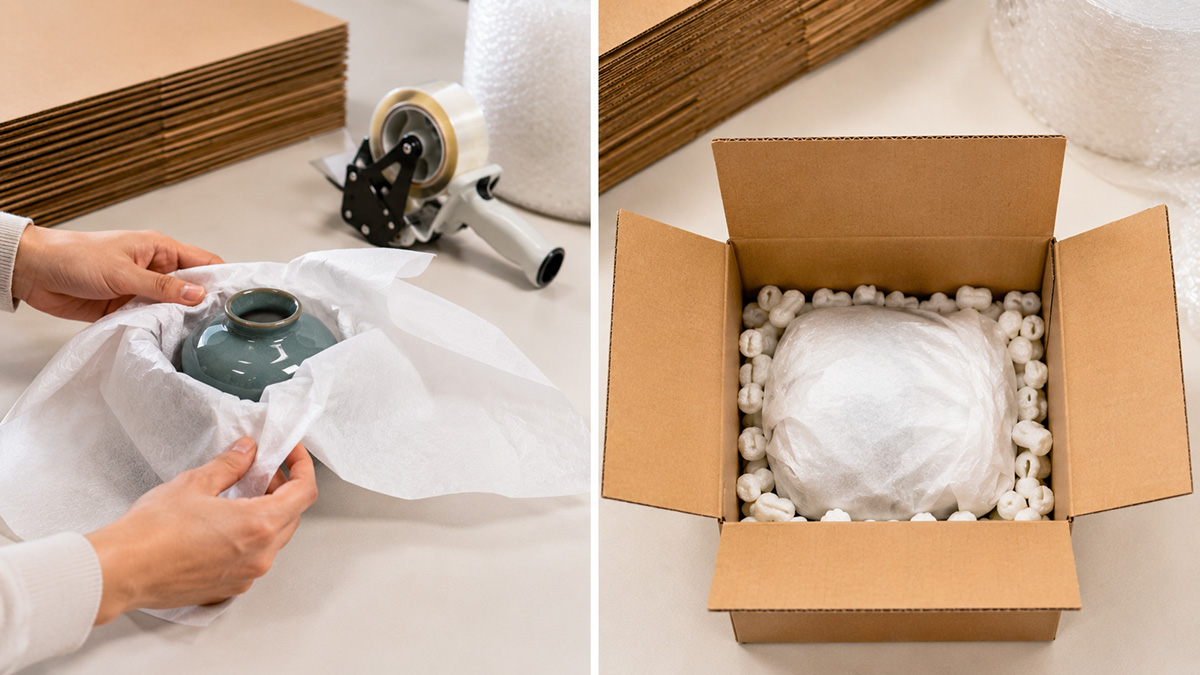
A common packing mistake is treating tissue paper as cushioning. Tissue paper can help with presentation, separation and light surface protection, but it is not a substitute for impact protection. If an item can crack, dent, chip or crush during transit, it usually needs a stronger protective system around it.
Think of acid-free tissue paper as the first contact layer. It can sit closest to the product. Then the packer can add cushioning, void fill or a stronger outer carton depending on the risk. This is especially important for fragile ecommerce orders, where damage often happens because the product moves inside the carton rather than because the first wrapping layer was missing.
For products that need structure around them, mailing boxes are usually a better outer packaging choice than tissue paper alone.
Acid-free, buffered and unbuffered: the practical difference
For everyday business packaging, most buyers simply look for acid-free tissue paper because they want a safer wrapping material than ordinary tissue. For storage and conservation-sensitive use, the buffered versus unbuffered distinction matters more.
Buffered acid-free tissue has an alkaline reserve that can help slow acid migration in some paper-based materials. Unbuffered acid-free tissue is usually the safer general-purpose choice when the item is sensitive to alkalinity, such as some textiles, dyes, photographs, silk, wool, leather or certain natural materials. This is why conservation guidance often treats the right tissue type as material-dependent rather than one-size-fits-all.
For commercial packaging, the practical takeaway is simple: use acid-free tissue where the wrapping layer touches the product, and check the product specification if the item will be stored for a long time or has sensitive materials. For standard retail presentation or ecommerce dispatch, acid-free tissue paper is usually chosen for its balance of softness, presentation and product-friendly wrapping.
Colour choice matters more than many businesses expect
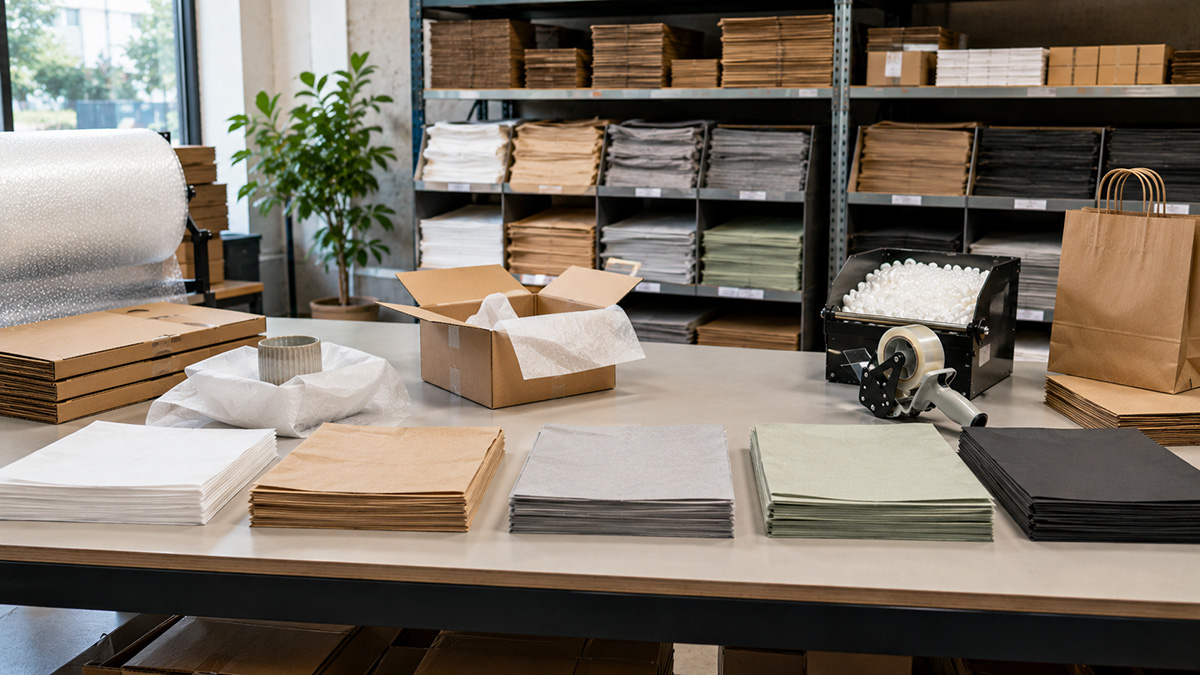
Colour is often selected for branding, seasonality or product presentation. Black tissue can create a luxury look, kraft can suit natural or understated packaging, and pale colours can soften a gift or apparel order. That is useful, but colour should still be matched to the product.
For pale garments, delicate fabrics, archival-style storage or any situation where moisture might be present, white or uncoloured acid-free tissue is often the more cautious option. Coloured tissue can be useful for retail presentation, but businesses should avoid assuming every colour is suitable for every product surface or storage condition.
For shopfront and gift-style presentation, tissue paper can also be paired with paper bags to create a simple retail packaging workflow.
How to choose sheet size, GSM and pack quantity
The right tissue paper is not only about colour. Sheet size, GSM and pack quantity affect how quickly staff can pack orders and how consistent the finished result looks.
Larger sheets are useful when wrapping garments, boxes, giftware or products that need a full fold-over. Smaller sheets can be easier to handle for small accessories or product separation. Lower GSM tissue generally feels lighter and softer, while heavier options can feel more substantial and may be easier to handle in a busy packing area.
For B2B purchasing, pack quantity is also a workflow decision. A business packing hundreds of orders a week should avoid buying only around colour preference; it should also consider how fast the tissue is used, where it will be stored, how many packing stations need access, and whether the selected sheet size works across most products.
A practical packing method for business orders
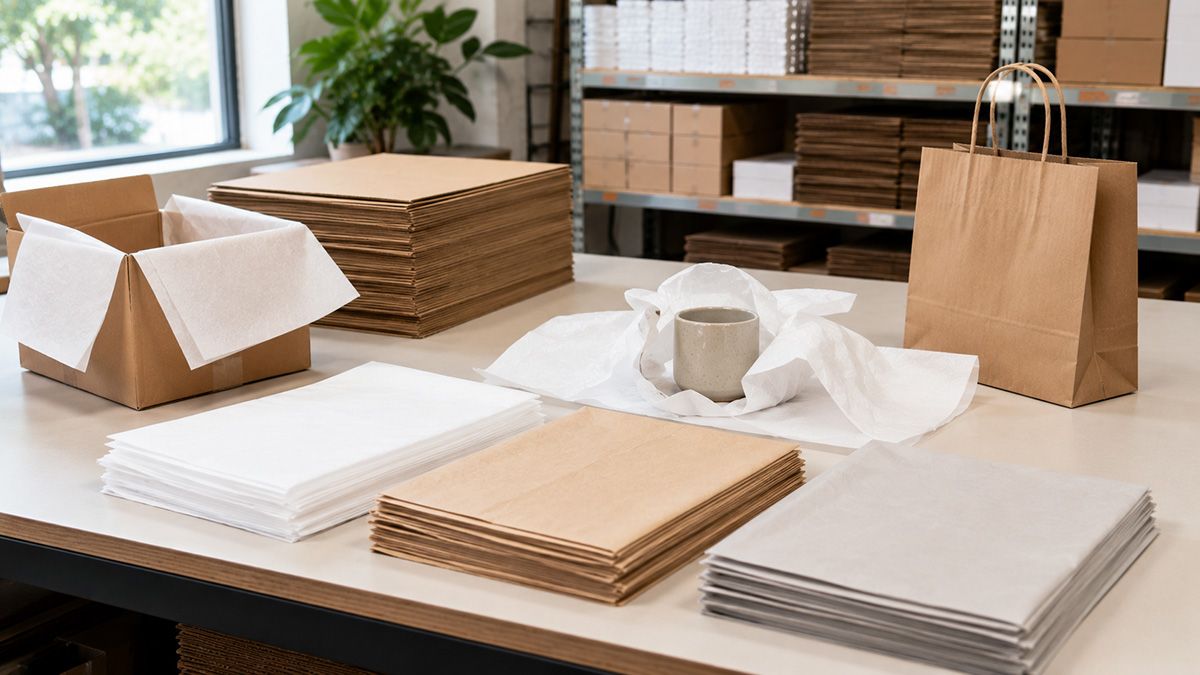
A simple repeatable method is usually better than letting every packer wrap products differently:
- Choose a tissue sheet size that covers the product without excessive folding or waste.
- Place the product on the tissue so the first fold protects the most visible or sensitive surface.
- Fold neatly without pulling the tissue too tight around corners or raised details.
- Use one consistent finishing method, such as a fold, sticker or sleeve, so the order looks deliberate.
- Place the wrapped product into the correct outer packaging and add cushioning or void fill if it can move during transit.
This is where acid-free tissue paper becomes more than a presentation material. In a warehouse or fulfilment setting, it helps create a standardised first layer that protects the product surface, improves the unboxing experience and gives staff a repeatable way to prepare orders.
FAQ
Is acid-free tissue paper the same as regular tissue paper?
No. Regular tissue paper may contain acidic components that are less suitable for delicate surfaces or longer-term contact. Acid-free tissue paper is made or processed to reduce that issue, which is why it is commonly used for wrapping, interleaving and presentation-sensitive packaging.
Can acid-free tissue paper protect fragile products during shipping?
It can help protect surfaces from light rubbing, but it should not be treated as the main cushioning material. Fragile products usually need an outer box and suitable protective packaging to reduce impact and movement during shipping.
Is white acid-free tissue paper better than coloured tissue paper?
White or uncoloured tissue is often the more cautious option for pale fabrics, long-term storage or moisture-sensitive situations. Coloured tissue can be useful for retail presentation, but the product surface and storage conditions should be considered.
What GSM tissue paper should a business choose?
It depends on the product and packing process. Lighter tissue is soft and easy to fold, while heavier tissue can feel more substantial and easier to handle. Businesses should choose based on product size, presentation needs and packing speed.
Can acid-free tissue paper be used for clothing?
Yes, it is commonly used for garments and textiles because it can separate layers, reduce rubbing and improve presentation. For conservation-sensitive textiles such as silk, wool, leather or long-term archival storage, check the exact tissue specification before use.