Free Delivery (by us) for Orders Over $550. Available in VIC metros only.
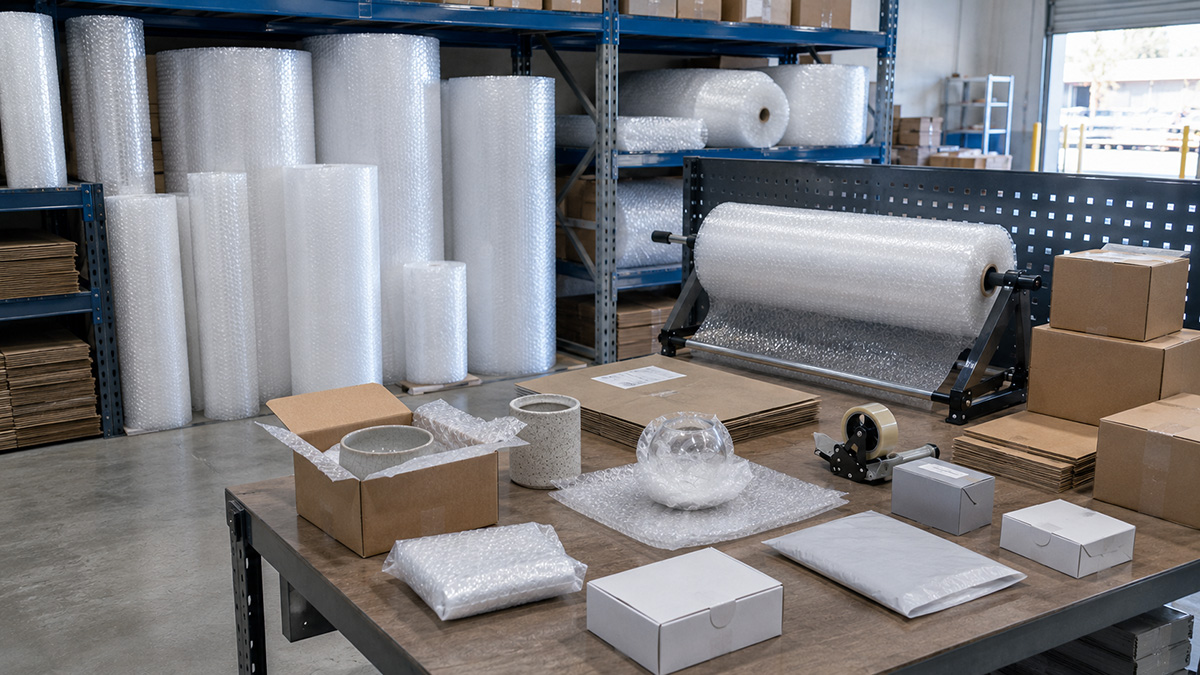
Bubble wrap size can mean several different things. It may refer to the size of the air bubbles, the width of the roll, the length of the roll, the number of layers, or whether the material is supplied as a standard or perforated roll. For a business packing orders every day, all of those details affect the final result.
The best bubble wrap is not always the thickest roll or the largest bubble. It is the option that gives the product enough surface protection and cushioning while still fitting the box, keeping packing time under control, and avoiding unnecessary material waste. Stanley Packaging supplies bubble wrap options for Australian businesses, but the practical choice depends on how the product is handled, packed and shipped.
This guide explains how to think about bubble size, roll size, heavy duty options, perforated formats and bulk buying from a business packing perspective.
What bubble wrap size actually means
When people ask for a bubble wrap size, they are often asking about different specifications without realising it. One person may mean the bubble diameter. Another may mean the roll width. A warehouse team may be more concerned about the roll length, because that affects how often the packing bench needs to be restocked.
Before comparing products, it helps to separate the main specifications:
- Bubble size: the approximate diameter or height of the air cells, such as smaller everyday bubbles or larger 20mm bubbles.
- Roll width: how wide the roll is across the bench, which affects how many passes are needed to cover the product.
- Roll length: how many metres are supplied on the roll, which affects storage, restocking and cost per packed order.
- Layer or construction: single layer, double layer, laminated, foil-backed or other specialised formats.
- Perforation: whether the roll can be torn at regular intervals without cutting.
For B2B packing, these details matter because a roll that looks cheaper per metre may still be slower to use, harder to store, or less suitable for the product range being packed.
Choosing bubble size: surface protection vs impact cushioning
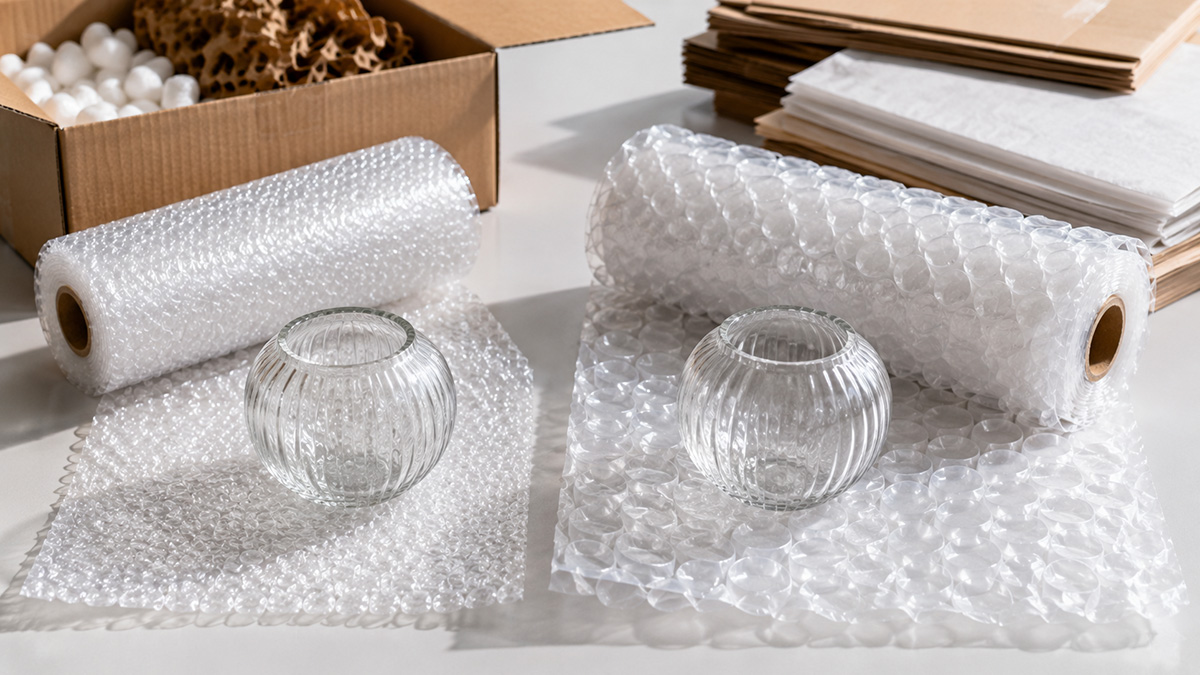
A useful way to choose bubble size is to separate surface protection from impact cushioning. Smaller bubbles sit closer to the product and can conform more easily around light, small or surface-sensitive items. They are often useful when the main concern is rubbing, scuffing or light handling marks.
Larger bubble options create more air space between the product and the outside of the parcel. That extra air gap can help where the product needs more cushioning against bumps and drops. For example, 20mm bubble wrap may be more suitable for bulkier or higher-risk items than a smaller everyday bubble.
Bigger bubbles are not automatically better in every situation. If a small product is wrapped in very bulky material and then placed into an oversized box, the product may still move around. In that case, the issue is not only bubble size. It is the whole packing system.
| Packing need | Practical bubble wrap direction | Why it matters |
| Light surface protection | Smaller bubble or close-fitting wrap | Helps reduce rubbing without adding too much bulk. |
| General ecommerce dispatch | A roll width that covers the product in one or two passes | Makes packing faster and easier to repeat. |
| Higher impact risk | Larger bubble or heavier duty option | Creates more cushioning space around the product. |
| Fast repeat packing | Perforated roll where sheet size is predictable | Can reduce cutting time and keep usage more consistent. |
| Oversized box space | Bubble wrap plus suitable void fill | The wrapped product still needs to be held in place. |
When heavy duty bubble wrap makes sense
Heavy duty bubble wrap is useful when the product or shipping environment has a higher handling risk. That may include heavier products, higher-value goods, items with corners or edges, products that may be stacked, or orders that will pass through several handling points before reaching the customer.
It should not be treated as the answer to every packing problem. If the box is too large, the carton is too weak, or the product is not secured inside the parcel, heavier bubble wrap can still underperform. The packaging has to work as a system: product wrap, box fit, void fill and outer strength all have a role.
For routine lightweight products, a standard bubble wrap option may be enough. For products with more impact risk, a heavier duty or larger bubble option can be worth testing, especially if damage replacement cost is higher than the extra material cost.
Roll width and roll length affect packing speed
In a business packing environment, roll width is not just a product specification. It affects how packers move. A roll that is too narrow may require several passes around the same product. A roll that is much wider than needed may create offcuts and slow down the bench because staff have to fold or trim excess material.
Roll length also matters. Longer rolls may reduce restocking and can suit higher-volume packing teams, but they need storage space and a bench setup that can handle them. Shorter rolls may be easier for small packing areas or occasional use, but can be less efficient when a team is packing the same product type repeatedly.
A good test is to pack ten to twenty real orders using the proposed roll size. If the packer is constantly trimming, doubling back, or reaching for a second material, the roll may not suit the workflow even if the bubble size is technically correct.
Why perforated bubble wrap can improve consistency
Perforated bubble wrap is useful when packing teams need repeatability. The advantage is not only that it can be torn without scissors. It also helps define a standard sheet length for recurring products, which can reduce variation between staff and make material use easier to control.
For fulfilment, subscription orders, warehouse dispatch and retail replenishment, perforated bubble wrap can make sense when the same product sizes are packed often. It can also keep the bench cleaner and safer by reducing loose blades or constant cutting.
Perforation is less important if the business packs many different product shapes and every item needs a custom length. In that case, a standard roll may provide more flexibility.
Single layer, double layer and specialised bubble wrap
Bubble wrap construction changes how the material behaves during packing. A single layer can suit everyday wrapping and light protection. Double layer bubble wrap can offer a more substantial feel and may be useful where products need extra cushioning or where the material is handled more heavily during packing.
Specialised options such as laminated, foil-backed, antistatic or degradable bubble wrap should be chosen for the specific job they are designed to do, not simply because they sound more advanced. For most ecommerce and warehouse packing, the first decision should still be product risk, bubble size, roll width and box fit.
If a business packs a wide product range, it may be more practical to keep one everyday bubble wrap option and one higher-protection option rather than trying to stock every format. This keeps procurement simpler and makes packing decisions easier for staff.
Bubble wrap cannot fix a box that is too large
One of the most common packing mistakes is using a large box and relying on bubble wrap to solve the empty space. Bubble wrap can cushion the product, but it should not be expected to fill every gap inside the carton. If the product can move after the box is closed, the package is still at risk.
A better sequence is to wrap the product first, choose a suitably sized mailing box or carton second, then use void fill only where needed to control movement.
This is especially important for fragile products, mixed orders and items with irregular shapes. The goal is not to use the most material. It is to stop the product from shifting, rubbing or taking direct impact during normal handling.
Bulk buying: judge cost per packed order
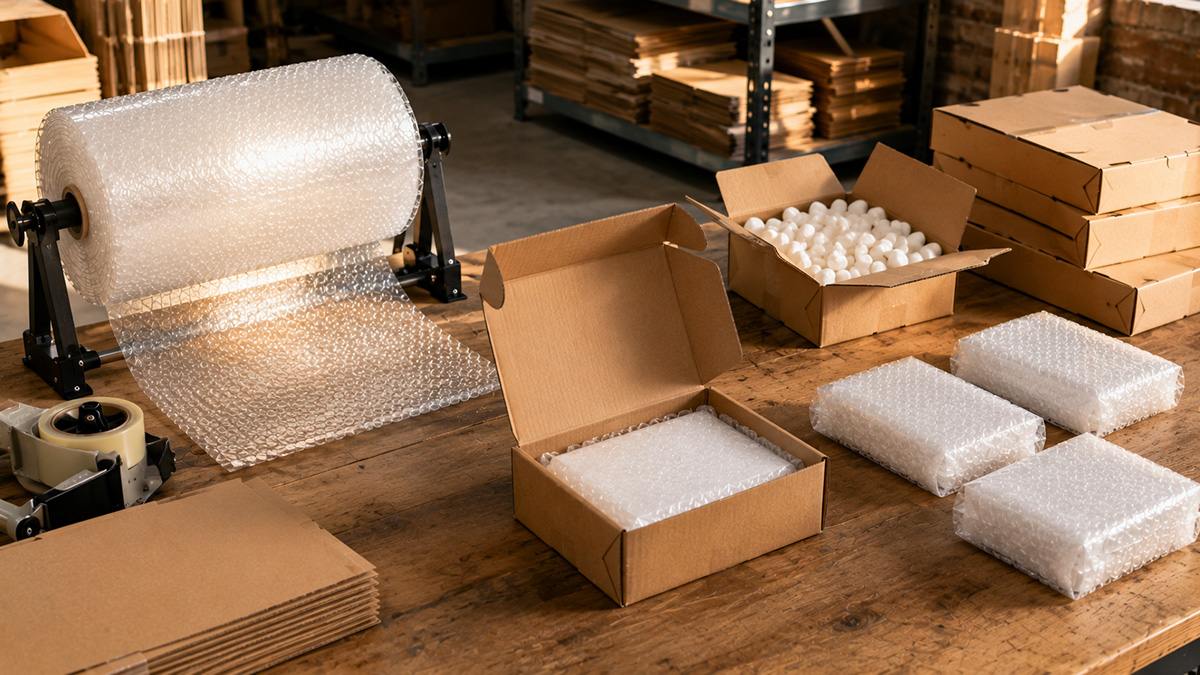
For businesses, bubble wrap is usually not bought for one parcel. It is bought for a packing process. That is why cost per roll is only part of the calculation. A better measure is cost per packed order, including the average amount used, the time taken to wrap, the number of offcuts created, and the storage space required.
A wider or larger roll may look more expensive upfront but can be more efficient if it covers common products quickly and reduces bench restocking. A smaller roll may be easier to handle but less suitable for high-volume dispatch. If the team regularly packs the same products, it is worth calculating how many orders a roll actually completes.
Businesses with varied product ranges may benefit from two bubble wrap setups: one everyday option for light to moderate protection and one higher-cushioning option for products with higher risk. This keeps the range manageable without forcing one roll to do every job.
A simple process for choosing bubble wrap size
- Identify the product risk: surface marking, breakage, weight, sharp edges, pressure sensitivity or movement risk.
- Choose the bubble size based on the job: smaller bubbles for close surface protection, larger bubbles for more cushioning space.
- Check the roll width against the product, not just the storage shelf. The right width should reduce awkward folding and trimming.
- Decide whether perforation will help standardise packing for repeat products.
- Test the wrapped product inside the actual box or carton, then add void fill only where needed.
- Review the result at the packing bench: if staff need too many steps, the specification may not be practical enough for daily use.
A practical note on recycling and reuse
Bubble wrap can often be reused if it is clean, dry and still holding air. Reuse is usually the simplest practical option in a warehouse or dispatch setting, especially for internal transfers, returns handling or protecting stock during storage.
Recycling is more location-specific. In Australia, bubble wrap is generally treated as a soft plastic, and soft plastics should not be assumed suitable for a standard yellow-lid recycling bin. Local council and soft plastic drop-off guidance can vary, so businesses should check the current options available in their area before making recycling claims to customers.
FAQ
What size bubble wrap is best for fragile items?
It depends on the product. Smaller bubbles can work well for light surface protection, while larger bubbles or heavier duty options are better suited to products that need more cushioning space. The wrapped product still needs to fit well inside the box so it does not move around.
Is large bubble wrap always better?
No. Large bubble wrap can provide more cushioning, but it also adds bulk. For small or light products, a smaller bubble may sit more neatly against the surface. Large bubble wrap is most useful when extra air space and impact cushioning are needed.
What is the difference between bubble size and roll width?
Bubble size refers to the air cells in the material. Roll width refers to how wide the roll is across the packing bench. A business needs to consider both: bubble size affects protection, while roll width affects packing speed, coverage and waste.
When should a business use perforated bubble wrap?
Perforated bubble wrap is useful when the same or similar products are packed repeatedly. It can reduce cutting time, make sheet lengths more consistent and help packing teams use material more predictably.
Can bubble wrap be recycled in Australia?
Bubble wrap is generally considered a soft plastic. It should not be automatically placed in standard kerbside recycling, because local rules and drop-off options vary. Businesses should check current local guidance and avoid making broad recycling claims unless the relevant pathway has been confirmed.
Should bubble wrap be used instead of void fill?
They do different jobs. Bubble wrap cushions and protects the product surface. Void fill helps stop the wrapped product moving inside the box. For fragile or irregular products, both may be needed.