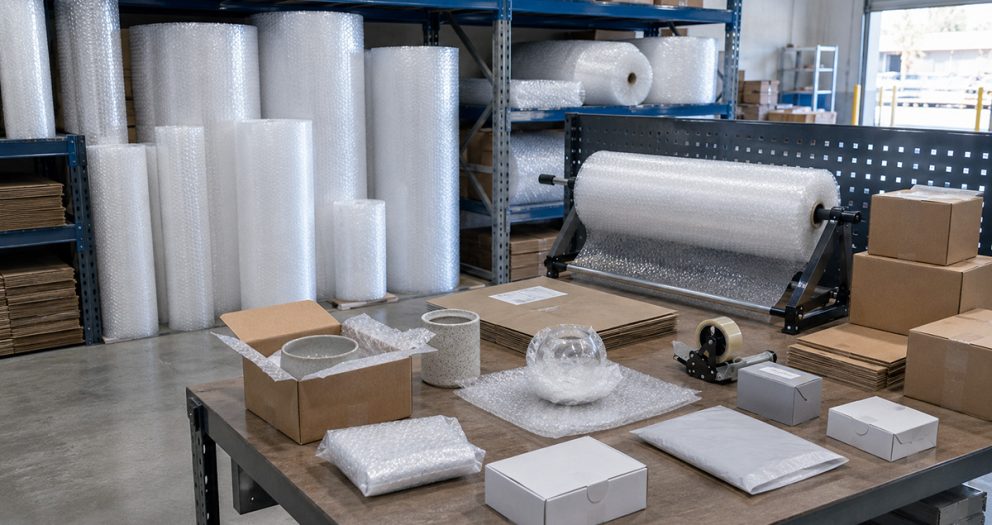
Free Delivery (by us) for Orders Over $550. Available in VIC metros only.
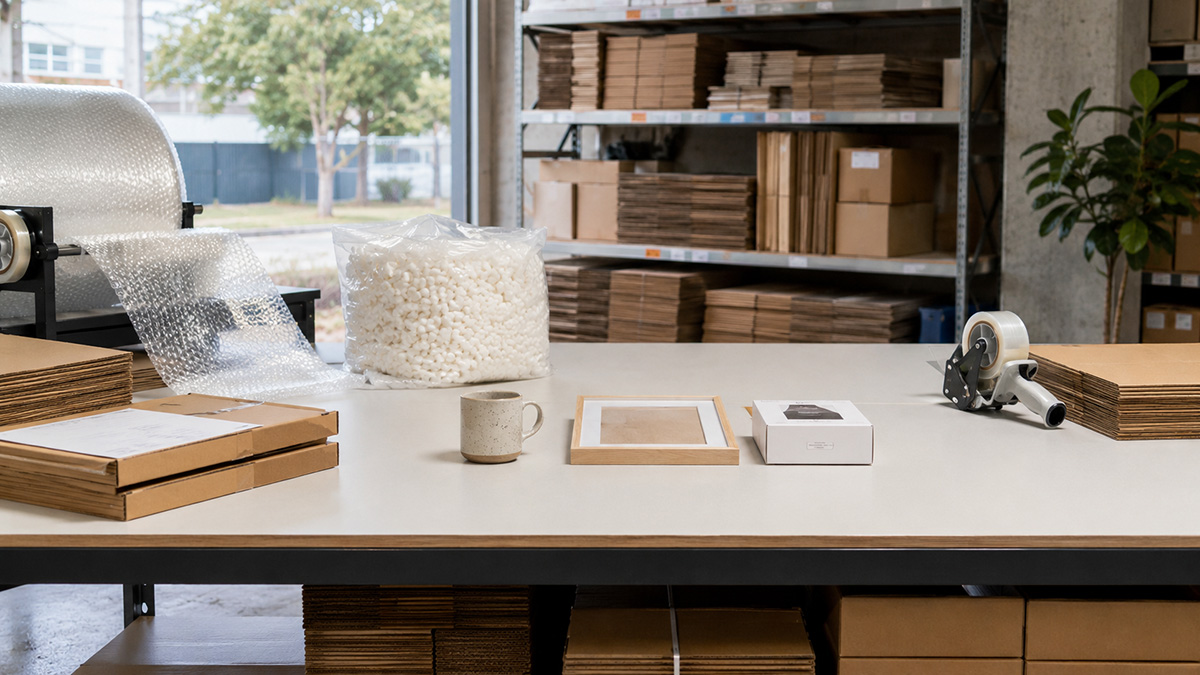
Fragile packing is about controlling risk, not just adding more wrap. Bubble wrap is a familiar packaging material, but the right choice depends on what the product needs protection from. A product may need surface protection, impact cushioning, corner protection, movement control inside the carton, or a combination of all four. That is why businesses usually get better results by choosing bubble wrap as part of a full packing method rather than treating it as a standalone fix.
For fragile products, the strongest pack is usually the one that is repeatable. If a warehouse team can wrap the same item the same way, place it in the same size box and block movement consistently, the result is more reliable than a packing process that changes with every order.
Start with what can go wrong in transit
Different fragile products fail in different ways. A glossy retail item can arrive marked even if it does not break. A ceramic mug can crack at the handle. A framed item can be damaged at the corner. A small part can survive the wrap but still hit the inside wall of an oversized box. Before choosing the bubble size or roll width, identify the main handling risk.
| Risk to control | Common examples | Packaging direction |
| Surface marking | Glossy, painted, coated or polished products | Use wrap as a separator, and add a soft layer first if the surface may mark easily. |
| Corner or edge damage | Frames, boxed retail goods, flat panels, rigid items | Add extra protection around corners and choose a box that leaves room for cushioning. |
| Impact breakage | Glass, ceramics, hardware, spare parts, delicate components | Use enough cushioning so the product does not sit close to the carton wall. |
| Movement inside the carton | Small items in larger boxes, mixed orders, irregular shapes | Wrap the item, then block empty space so it cannot shift during handling. |
This is the first useful filter: if the main risk is surface marking, neat coverage may matter more than a thick cushion. If the main risk is impact, the product needs space and air cushioning around it. If the main risk is movement, the wrap alone will not solve the problem unless the box is also filled and sized correctly.
Small bubbles, large bubbles and heavier duty options
A common mistake is assuming bigger bubbles are automatically better. In practice, the right bubble size depends on whether the product needs a flexible surface layer, a deeper impact buffer or extra space between the item and the carton wall.
Small bubble wrap
Smaller bubble wrap is often useful for lighter items, small products and goods that need a close protective layer. It can conform more neatly around curved or irregular shapes and is commonly used where the aim is to reduce surface contact, rubbing and light knocks. For many standard ecommerce orders, small bubble wrap is also easier for packing teams to handle quickly and consistently.
Larger bubble wrap
Larger bubbles create more air space around the item, so they are better suited to products that need more impact cushioning. They also take up more carton space. If a product needs that deeper buffer, options such as 20mm bubble wrap can be useful, provided the outer box allows enough room without crushing the cushioning layer.
Double layer and specialty options
Heavier, awkward or higher-risk products may need a stronger cushioning layer rather than simply more layers of standard wrap. Double layer bubble wrap can suit packing situations where a tougher protective layer is needed. Depending on the product range, businesses may also consider perforated, antistatic, foil-backed or degradable options for specific packing workflows.
The box matters as much as the wrap
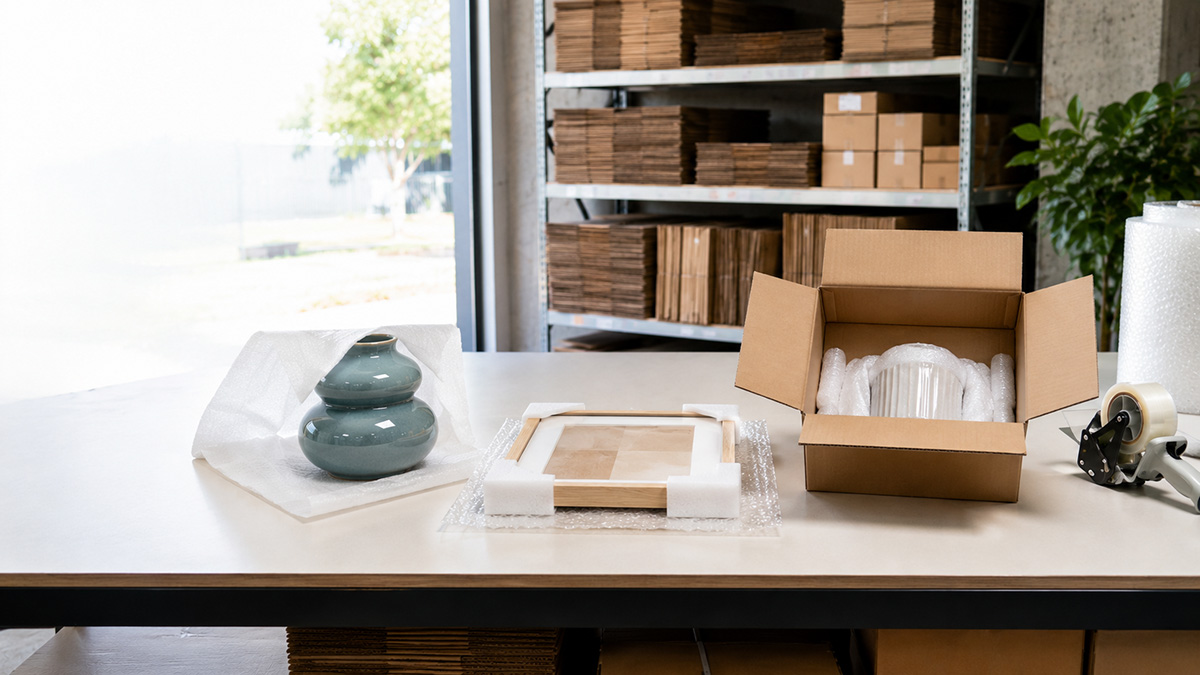
Bubble wrap protects the item, but the box protects the wrapped item from compression, stacking and the normal handling that happens after dispatch. If the box is too tight, the cushioning can be flattened before it does its job. If the box is too large, the product may move around and hit the carton wall.
For many ecommerce, retail and fulfilment orders, a suitable combination is bubble wrap plus correctly sized mailing boxes. The wrapped product should have enough cushioning around it, but not so much spare room that it becomes loose inside the parcel.
Stop movement inside the carton
This is one of the most overlooked causes of damage. A product can be wrapped neatly and still arrive broken if it is free to move inside the box. Once the parcel is in a courier network, that movement can turn the wrapped item into a weight repeatedly hitting the inside walls of the carton.
After wrapping the product, use appropriate void fill to stop movement without forcing so much material into the carton that the cushioning is compressed. A simple shake test is useful for warehouse packing: if the packed item moves, adjust the fill, box size or packing method before using that pack for repeat orders.
Think about packing speed as well as material cost
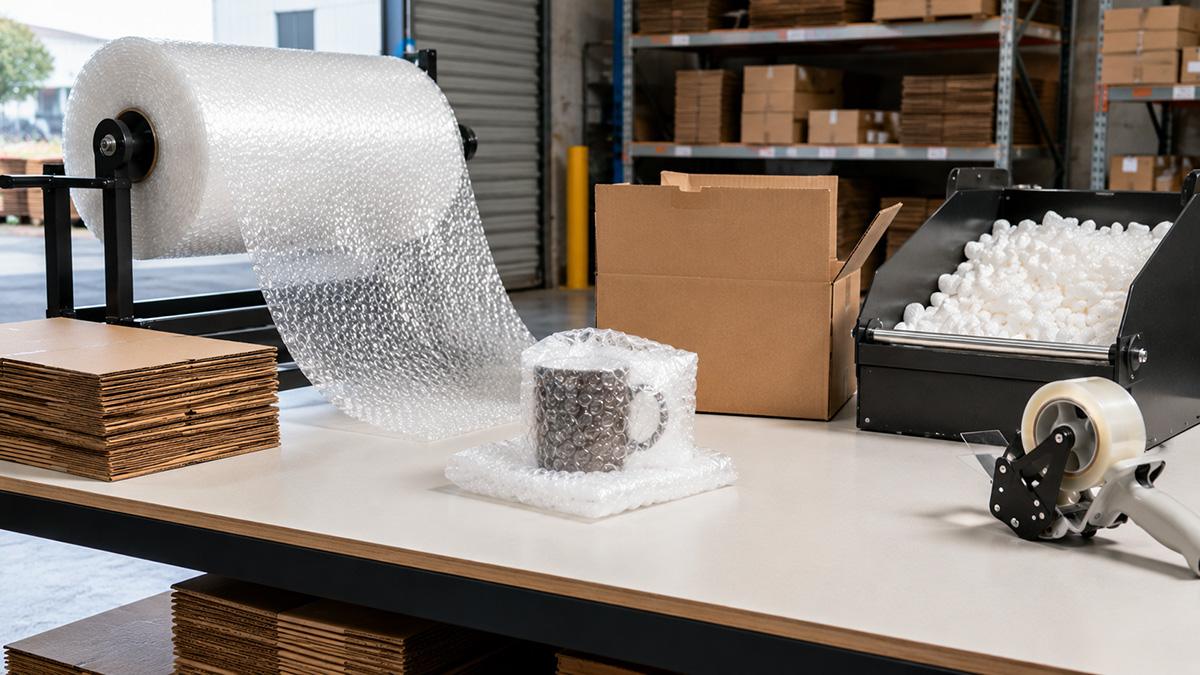
For B2B supply, the cheapest protective material is not always the cheapest packing process. In a busy warehouse or fulfilment setup, roll width, perforation, bench layout and repeatable pack instructions all affect labour time. If staff need to cut several strips, rewrap loose corners or change box sizes constantly, the apparent saving on material can disappear in handling time.
For repeat products, it is worth standardising the pack: roll width, number of wraps, box size, void fill method and any notes for corners or delicate finishes. This works for small dispatch operations, but it becomes even more important for larger ecommerce and wholesale fulfilment where consistency affects training, packing speed and damage rates.
A practical bubble wrap selection guide
| Product or workflow situation | Bubble wrap direction | Packing note |
| Lightweight product needing surface protection | Small bubble wrap | Keep the wrap neat and avoid loose folds that slow packing. |
| Small fragile item | Small bubble wrap with extra protection on corners or pressure points | Use a snug box and fill empty space so the item cannot shift. |
| Bulky fragile item | Larger bubble wrap or layered cushioning | Allow enough carton space so the bubbles are not crushed. |
| Heavier or awkward product | Double layer or heavier duty options where suitable | Check box strength, tape and void fill as part of the complete pack. |
| High-volume repeat packing | A roll width and format that suits the packing bench | Optimise for repeatability, speed and consistent protection. |
When bubble wrap is not enough on its own
Some products need a more complete protective system. Heavy items, sharp-edged products, liquids, delicate glass, irregular machinery parts and high-value goods may need dividers, corner protectors, reinforced cartons, foam, paper cushioning or a product-specific method. Bubble wrap is useful, but it should not be expected to compensate for a weak box, poor taping or too much empty space.
A reliable business packing method considers the full pack: product, inner wrap, corner or edge support, outer box, tape, void fill and handling instructions. Testing a packed sample before committing to a repeat method is often more useful than adding another layer of wrap after damage has already happened.
A careful note on reuse and recycling
Bubble wrap can often be reused if it is clean and still has enough air in the bubbles to cushion the product. For disposal, businesses should be careful with blanket recycling claims. In Australia, soft plastic recycling options vary by area and may change over time, so it is safer to check local guidance before telling customers to place bubble wrap in a household recycling bin.
Where Stanley Packaging fits into the packing workflow
Stanley Packaging supplies bubble wrap, mailing boxes and other protective packaging for Australian warehouse, retail and ecommerce packing workflows, including bulk supply for businesses with regular dispatch needs.
FAQ
Is small or large bubble wrap better for fragile products?
Use small bubble wrap when the item mainly needs surface protection or a close protective layer. Use larger bubble wrap when the item needs more air cushioning and impact protection. The product weight, shape and box size all matter.
How much bubble wrap should I use around a fragile item?
Use enough to protect the surface, corners and pressure points without making the pack too tight inside the box. If the wrap is crushed before the parcel is closed, it has less cushioning value.
Can bubble wrap replace void fill?
Usually no. Bubble wrap protects the product itself, while void fill helps stop the wrapped product from moving inside the carton. Fragile items often need both.
Should the bubbles face in or out?
For many general packing jobs, the bubbles face the item so they cushion the surface. For delicate finishes, add a soft layer first so the bubble pattern does not mark the product.
What is the most common mistake when packing fragile products?
A common mistake is wrapping the product well, then leaving it loose inside an oversized box. If the wrapped item can move, it can still be damaged during handling.
Is bubble wrap recyclable in Australia?
Recycling options depend on local soft plastic programs and council guidance. Businesses should avoid making broad recycling claims and check current local advice before giving disposal instructions to customers.