Free Delivery (by us) for Orders Over $550. Available in VIC metros only.
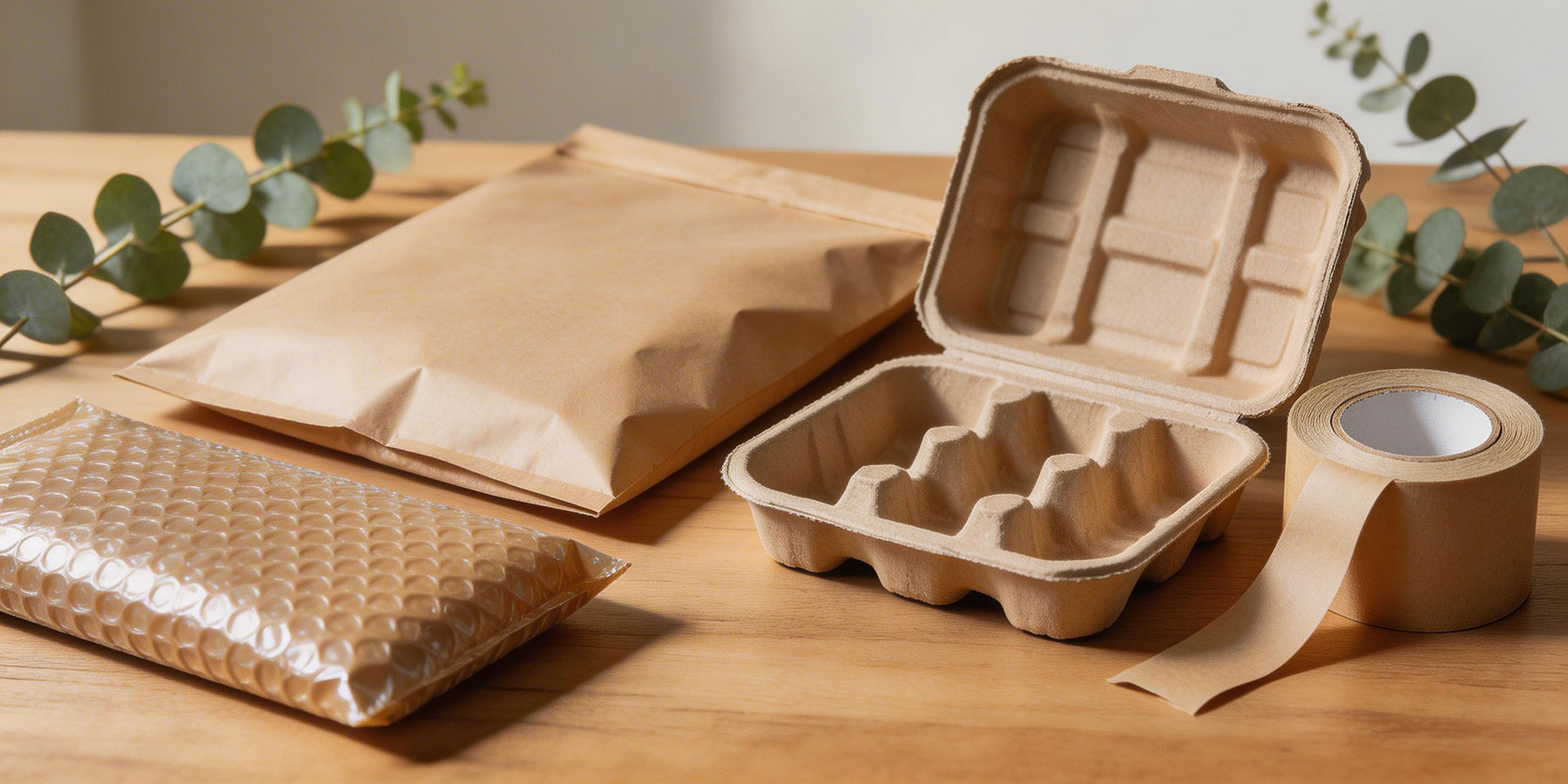
Sustainable packaging has moved well past being a niche concern. Australian consumers increasingly factor packaging waste into their purchasing decisions, and with the Australian Packaging Covenant Organisation (APCO) setting national targets for packaging recyclability and recycled content, businesses that haven’t started thinking about this are increasingly behind the curve.
The good news is that switching to more sustainable packaging doesn’t require an expensive overhaul or a compromise on protection. It mostly requires understanding what your options actually are – and what the terminology really means.
Understanding the Terminology
The words ‘recyclable’, ‘compostable’, and ‘biodegradable’ are used loosely in packaging marketing, and the distinctions matter practically in the Australian context.
Recyclable means the material can be processed through a recycling system – but not all recyclable materials are accepted in kerbside bins. Soft plastics, for example, are technically recyclable but require drop-off at participating collection points rather than the yellow bin. Paper and cardboard are accepted kerbside almost universally. When evaluating whether something is genuinely recyclable for your customers, the question to ask is: can the average Australian household dispose of this through their normal recycling system?
Compostable means the material will break down into non-toxic organic matter under composting conditions. Certified compostable packaging (look for AS 4736 or AS 5810 certification marks) will break down in industrial or home composting environments respectively. The catch is that compostable packaging sent to landfill doesn’t break down meaningfully – it needs the right conditions to do its job.
Biodegradable is the least regulated term of the three. It technically means the material will break down over time, but there’s no standard timeframe or condition requirement attached to it in Australia. A product labelled biodegradable could take decades to break down in landfill conditions. Treat this term with scepticism unless it comes with a specific certification.
For most businesses, ‘kerbside recyclable’ is the most practical target – it’s the option that requires the least behaviour change from your customers and has the most reliable end-of-life pathway.
The Options by Category
Paper-Based Alternatives
Paper is the most straightforward sustainable swap for many packaging applications. It’s kerbside recyclable, widely available, and performs well across a range of uses.
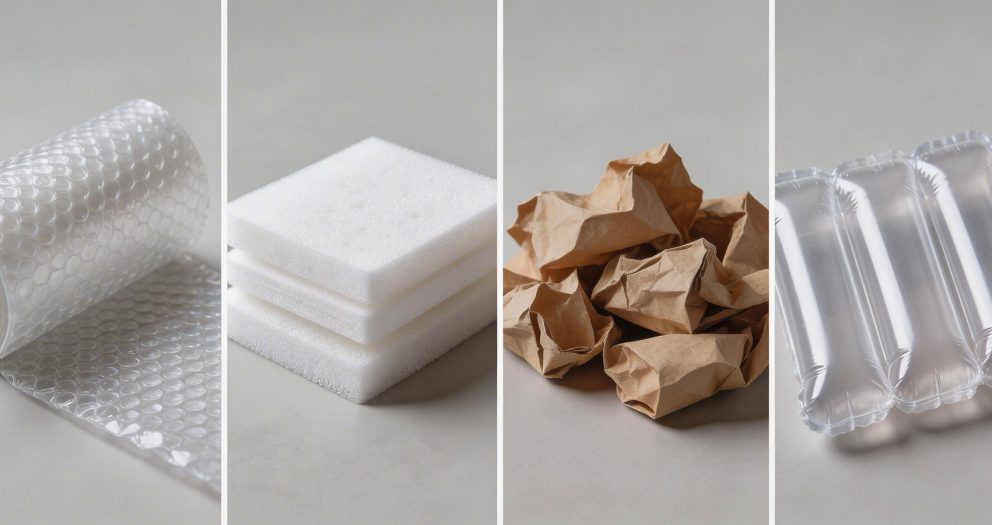
Kraft paper is the workhorse of sustainable packaging – durable, flexible, and effective as both a wrapping material and void fill. Crumpled kraft paper is a legitimate substitute for bubble wrap in many applications, particularly for products that aren’t highly fragile. It’s also the most cost-effective paper option, especially when bought in bulk rolls.
Honeycomb paper is worth knowing about if you’re looking for paper-based cushioning with more structural integrity than crumpled kraft. The honeycomb cell structure creates a surprisingly rigid protective layer when wrapped around an item, making it a viable alternative to bubble wrap for moderately fragile products. It’s fully recyclable and looks considered and premium in a way that crumpled paper doesn’t – relevant if your unboxing presentation matters to your brand.
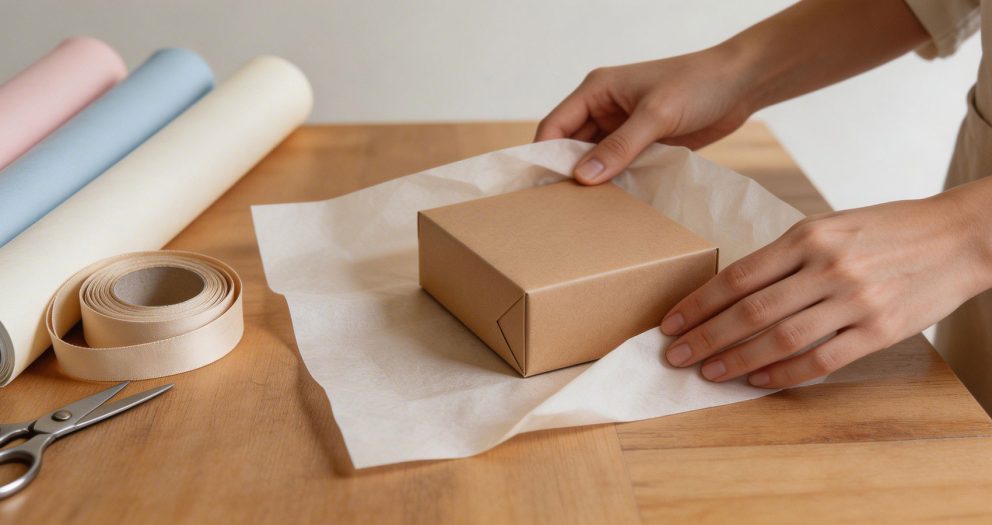
Tissue paper for surface protection and presentation is already paper-based and kerbside recyclable, making it one of the easiest existing packaging elements to keep in a sustainable setup.
Recycled and Recyclable Plastic
Not all plastic packaging is equal from a sustainability standpoint. There’s a meaningful difference between virgin plastic and plastic made from recycled content, and between plastic that’s recyclable and plastic that isn’t.
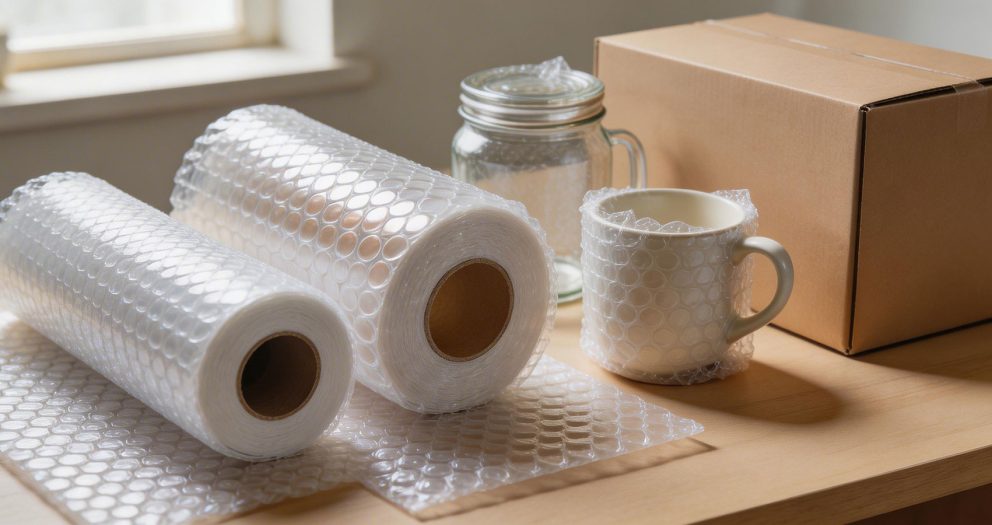
Eco-friendly bubble wrap is manufactured from recycled polyethylene content and is designed to be recyclable through soft plastics collection points. It performs identically to standard bubble wrap for protection purposes. For businesses that need bubble wrap’s cushioning performance but want to reduce their virgin plastic use, this is the most direct swap available.
Recycled-content mailing satchels follow the same principle – same performance, lower environmental footprint per unit. Look for satchels with recycled content certification rather than those that simply claim to be ‘eco’ without substantiation.
Compostable Options
Certified compostable mailers and bags are available for businesses whose customers are likely to have access to composting – either home composting or council green waste collection. These work best for brands in the food, health, or sustainability sectors where customers are more likely to actually compost the packaging rather than send it to landfill.
The honest caveat: if your customers are unlikely to compost, compostable packaging doesn’t deliver its environmental benefit. In that case, kerbside-recyclable options are a more reliable choice because the end-of-life pathway is more accessible.
Reusable Packaging
Reusable packaging – boxes, bags, or containers designed for multiple use cycles – has the lowest per-use environmental impact of any option, but it requires a model where packaging comes back to you. This works well for local delivery businesses, subscription models with a return scheme, or retail environments where customers bring their own. For standard e-commerce shipping, it’s generally not practical without a specific returns program built around it.
Making the Switch Without Blowing Your Budget
The most common concern about sustainable packaging is cost. The reality is more nuanced than ‘eco costs more.’
Start with the swaps that are cost-neutral or cost-positive. Kraft paper void fill, for example, is typically cheaper per cubic metre of fill than bubble wrap. Switching from standard to recycled-content satchels often involves a minimal price premium that narrows further as you buy in volume.
Prioritise the packaging elements your customers actually see and handle. The tissue paper inside the box, the outer mailer, the void fill that spills out when the box is opened – these are the touchpoints that shape perception. The interior cardboard structure of the box itself matters less from a customer-facing sustainability standpoint.
Buy in bulk where possible. Sustainable packaging options generally have the same volume pricing dynamics as conventional packaging – the per-unit cost drops significantly at higher quantities, which can close or eliminate any gap with conventional alternatives.
What to Communicate to Your Customers
If you’re making genuine changes to your packaging, tell your customers – clearly and accurately. A short note in the box (‘This packaging is kerbside recyclable’ or ‘Please recycle this through your local soft plastics collection’) helps customers dispose of packaging correctly and reinforces that your business has thought about this.
Avoid vague claims like ‘eco-friendly’ or ‘sustainable’ without specifics. Australian consumer law requires that environmental claims be accurate and substantiated, and increasingly savvy customers will notice if the language is generic rather than precise. ‘Made from 80% recycled content, recyclable through REDcycle soft plastics collection’ is a claim that means something. ‘Eco-friendly packaging’ on its own means very little.
The eco-friendly packaging range at Stanley Packaging includes options across paper, recycled plastic, and compostable materials. Orders are dispatched within one business day, and if you’re working through which options suit your products and customer base, the team is available on (03) 8795 7876 to help you make the right call.